Have You Ever Noticed That Rest and Relaxation Aren't Always the Same Thing?
What Do You Mean When You Say, “I Need Rest”?
What Do You Do When You're Very Down?
When I meet someone new in therapy, one question I often ask is, “What do you usually do when you're feeling really down?”
The answers vary, but they often fall into a familiar category: lying on the couch, watching TV or dramas, scrolling through reels, sleeping, staying home, or planning a vacation. We tend to put all of these under one big word: rest.
But I've become curious about what we actually mean when we say, “I need to rest.”
When you say you need rest, what are you actually asking to recover from?
Stopping Isn't Always Replenishing
Sometimes stopping an activity simply means the stress is no longer increasing.
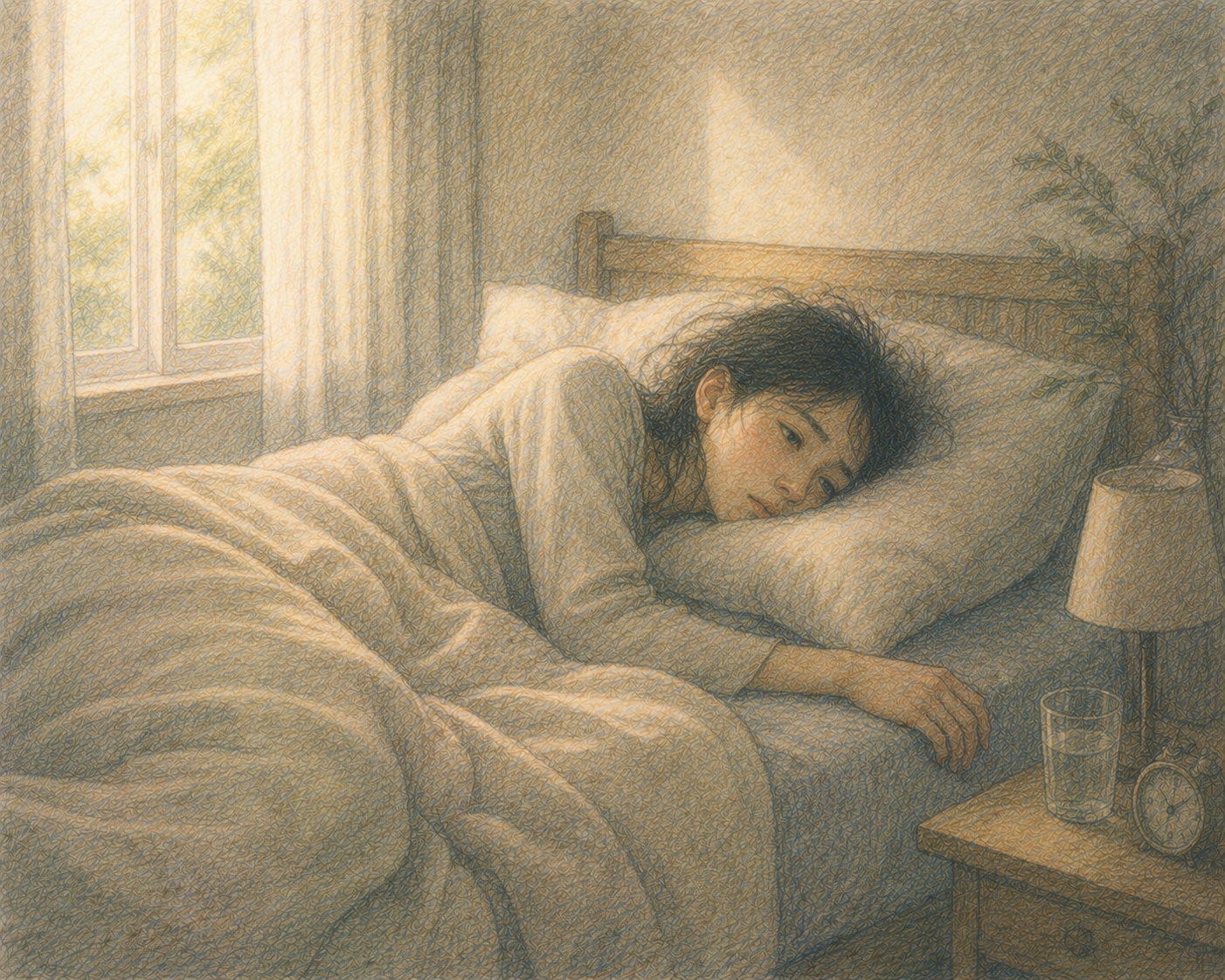
Sometimes you sleep for hours and still wake up tired — sleep and rest aren't always the same thing.
After a difficult workday, lying on the couch may stop the emails, decisions, and demands from continuing. That's important. But the tension accumulated throughout the day may still be there.
Physical inactivity doesn't automatically mean internal relaxation. And pausing depletion isn't necessarily the same as replenishment.
So perhaps there's another question worth asking.
Instead of only wondering, “Did I get enough rest?” we might first ask:
“What in me actually needed rest?”
Because once we know what has been depleted, rest may begin to mean something much more specific.
What Part of You Is Calling for Your Attention—and What Does It Need?
If rest isn't one single thing, then perhaps the next question is not simply, “How can I rest?”
It might be: What part of me is asking for attention right now, and what does it need?
There may not be one perfect way to categorize rest. Our needs overlap, change, and sometimes even compete with one another. But having a little more language can help us notice what we're actually looking for.
Physical Rest
Sometimes your body is simply tired.
You haven't slept enough. Your muscles are sore. You've been on your feet all day. Your body may be asking for sleep, a slower pace, less stimulation, or permission to stop.
This is perhaps the kind of rest we recognize most easily because the signals can feel obvious: I'm exhausted. I need to lie down.
Relational and Social Rest
Other times, what feels depleted is relational.
Maybe you've spent the entire day talking, listening, caregiving, or being available to other people. What you need might be solitude and a break from responding to anyone.
But relational restoration can also mean the opposite. After spending too much time alone, what you need may be a conversation with someone you trust, dinner with family, laughter with friends, or simply being around someone with whom you don't have to perform.
Sometimes connection itself is restful.
Inner Space
Then there are moments when what we need isn't exactly sleep or company. We need room to check in with ourselves.
What have I been feeling?
What keeps running through my mind?
Why did that interaction stay with me?
What am I needing underneath all of this?
Journaling, sitting quietly, therapy, meditation, or simply having uninterrupted time can create space for thoughts, feelings, triggers, and deeper needs to unfold.
This kind of rest isn't necessarily about becoming calm. Sometimes it's about finally having enough space to hear yourself.
Restoration
And then there are the things that simply seem to give something back to us.
This category may look completely different from person to person.
For me, it might be a walk with my dog. For someone else, exercise, hiking a trail, gardening, music, creating something, being in nature, or spending time with people they love.
These activities aren't necessarily passive. Some may even require physical energy.
Yet afterward, something feels different: more connected, more grounded, more alive, perhaps more like yourself.
From a nervous-system perspective, restoration doesn't always mean doing nothing. Sometimes experiences of safety, connection, movement, play, and belonging help us return to a more regulated and connected state.
Perhaps that's why asking “Did I rest?” isn't always enough.
A more useful question might be:
What part of me needed something—and did the rest I chose actually meet that need?

Rest can meet different needs—physical, relational, inward, or restorative—and we may need more than one at a time.
Rest Isn't a Simple Energy Equation
If we start thinking about these different needs, something interesting happens: rest stops being a simple equation.
We often imagine that anything requiring energy must make us more tired, while anything requiring very little energy must count as rest.
But our experience doesn't always work that way.
Something Can Tire You and Still Fill You Up
Imagine spending a Saturday with close friends. You drive an hour to see them, spend the afternoon talking and laughing, have dinner together, and drive home late.
By the time you get home, you're physically exhausted.
And yet, somehow, you feel better.
Your body may need sleep, but another part of you feels fuller—more connected, lighter, maybe even more like yourself.
Was the gathering restful?
Physically, probably not. Relationally and emotionally, perhaps it was deeply restorative.
A trail walk can tire your legs while clearing your mind. Cooking something you love requires attention and effort but may leave you feeling grounded. A meaningful conversation can use social energy while giving you connection in return.
Less Effort Doesn't Always Mean More Restoration
The opposite can also happen.
You can spend six hours on the couch doing almost nothing physically and still get up feeling emotionally drained, lonely, restless, or mentally overloaded.
Neither experience is wrong. They simply show us that energy spent and energy restored don't always come from the same place.
Perhaps restoration is less like filling one battery and more like caring for a system with different needs.
Sometimes one part of you gets tired while another gets replenished.
So instead of measuring rest only by “How little did I do?”, we might begin asking:
“What did this experience take from me—and what did it give back?”
Before You Rest, Notice What's Depleted
If different experiences can take from us and give back to us in different ways, then perhaps choosing rest begins before we decide what to do.
It begins with noticing:
What has been draining me lately?
Let Your Body Help You Answer
Sometimes we try to answer that question entirely through thinking. But your body may already have information that your mind hasn't put into words yet.
Notice how you arrive at the end of the day.
Is there heaviness behind your eyes? Tightness across your shoulders? Does your head feel crowded with thoughts? Do sounds and conversations suddenly feel like too much? Or perhaps your body feels physically tired, but underneath that fatigue there's also a longing for connection, movement, or something enjoyable.
These sensations don't always tell us exactly what we need. But they can offer clues.
Somatic awareness isn't about interpreting every sensation correctly. It's about becoming curious enough to notice what your experience is telling you before automatically reaching for your usual form of rest.
What Would Feel Different?
Imagine you've spent an entire week doing work that requires intense thinking—making decisions, analyzing problems, writing, planning, and holding many details in your mind.
Maybe another quiet evening on the couch isn't what feels restorative.
A comedy show might offer something different: bright lights, laughter, music, other people enjoying themselves around you. Your attention gets to follow something playful instead of solving another problem. You may notice your shoulders soften, your face move into a smile, or your breathing change as you laugh.
You are still taking in stimulation. You're still using energy.
But you're giving an overworked part of yourself a different experience.
That's why the question isn't always “What should I do to rest?”
Try noticing what has been depleted first.
Then become curious:
What kind of experience would give that part of me something different?
Sometimes your body will help you recognize the answer before you can explain why.
Learning Your Own Language of Rest
Notice What Actually Gives Something Back
There probably isn't one perfect formula for rest.
What restores someone else may do very little for you. Even your own needs can change from one day to the next. A dinner with friends might feel deeply replenishing today, while twenty minutes alone may be exactly what you need tomorrow.
Rather than deciding what should be restful, begin noticing what actually happens to you.
Think about something you did recently. How did you feel before? What happened in your body while you were doing it? How did you feel afterward?
Maybe your breathing became easier. Your thoughts slowed down. You felt more connected, playful, grounded, or simply more like yourself.
And notice what didn't change, too. What became fuller? What remained depleted?
Build Your Own Map
Over time, these small observations can become your own map of restoration.
Maybe gardening restores you. Maybe it's exercise, music, dinner with friends, walking your dog, twenty quiet minutes alone, or sometimes doing absolutely nothing.
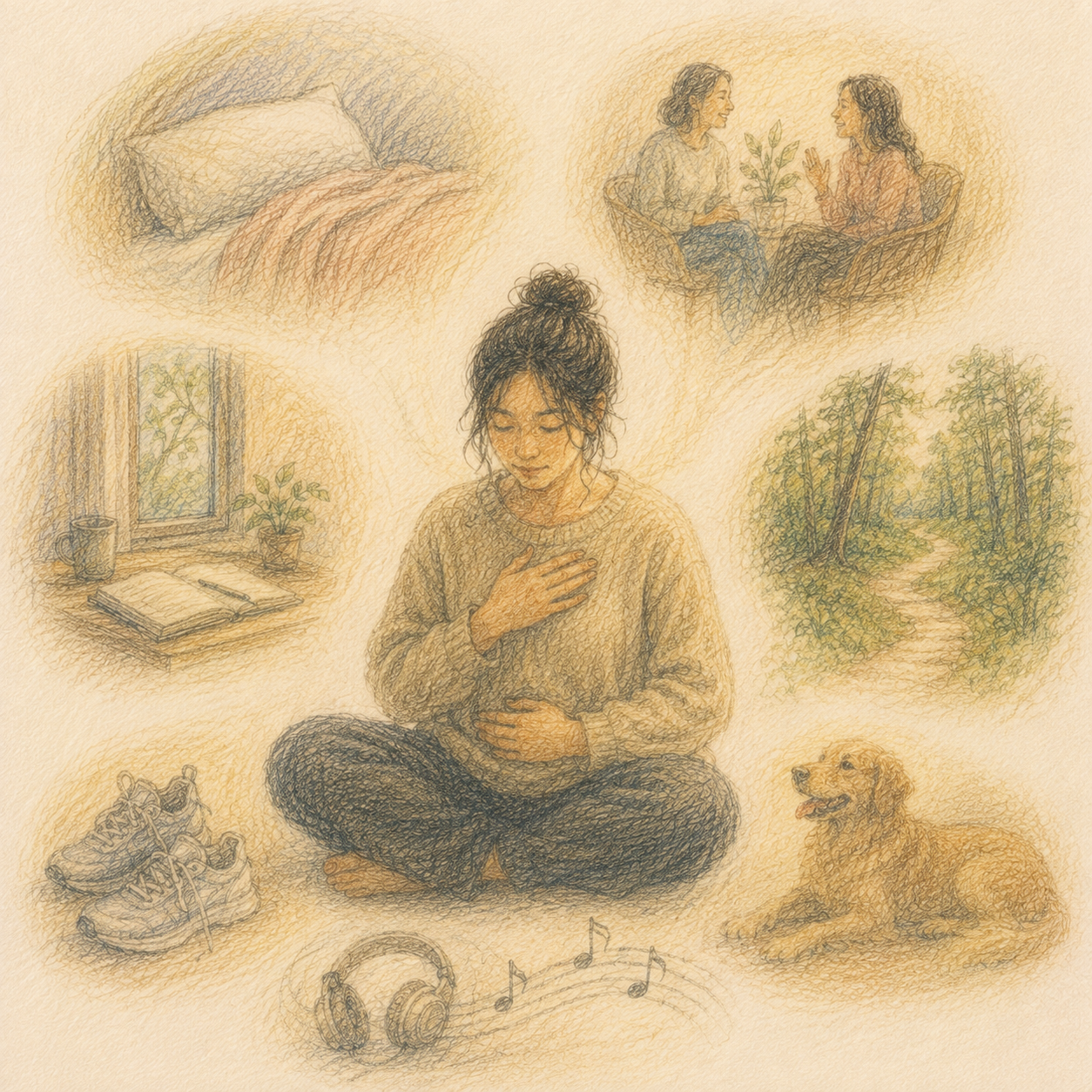
Learning your own language of rest begins by noticing what your body and inner experience actually need
The point isn't to find the right way to rest.
It's to become more familiar with your own signals and recognize that different moments may ask for different things.
Perhaps the better question isn't:
“Have I rested enough?”
but:
“What in me needs restoring right now?”
Continue Exploring
If this article resonated with you, you may also be interested in:
When Rest Feels Uncomfortable— Rest defined is one thing. Accessing it is another — this post explores why stillness can feel hard before it feels restorative.
Why Doesn't Every Vacation Feel Restful? — Stopping isn't always the same as replenishing. A closer look at why time off doesn't always translate to recovery.
Too Triggered to Think? Simple Grounding Tools — Once you know what part of you needs attention, here are a few concrete ways to meet it in the moment.
You Can't Heal What Your Body Still Fears: The First Step in Online Trauma Counseling California — Before rest can restore you, your body may need to trust that it's safe to stop. A deeper look at that first step.
About the Author
mini bio
