Sometimes Productivity Is a Survival Strategy
Productivity Is More Than Just a Work Ethic
Most of us think of productivity as a positive trait. We associate it with discipline, responsibility, perseverance, and success. Productivity helps us finish projects, care for our families, and move toward important goals. There is nothing inherently wrong with wanting to be productive.
Productivity often serves a purpose beyond getting things done.
This doesn't always look like productivity in the traditional sense. Sometimes it looks like constantly staying busy. Sometimes it sounds like:
"I should be doing something more useful right now."
"I don't know how to sit still."
"I feel guilty when I'm not doing something."
"I hate wasting time."
"I should be doing more."
You may not think of yourself as highly productive. You may simply notice that slowing down feels surprisingly difficult, or that free time makes you restless rather than relaxed.
During difficult seasons of life, productivity can serve an important purpose. When family expectations feel heavy, relationships feel uncertain, or life feels overwhelming, having something concrete to focus on can bring a sense of relief. A task can feel easier to manage than an emotion. Finishing a project can feel more straightforward than sitting with worry, disappointment, or fear.
Sometimes productivity becomes a way of coping with uncertainty.

The strategy that helped a child succeed often follows them into adulthood.
When we don't know what will happen next, productivity gives us a direction to move toward. It offers structure when life feels chaotic and creates a sense of progress when we feel stuck. Even if we cannot solve the underlying problem, staying busy can help us feel like we are doing something.
This is why productivity can feel so reassuring. It gives us something to hold on to when life feels unpredictable. Sometimes productivity is not simply about getting things done—it is part of how we learn to survive difficult seasons of life.
Productivity Gives Us Something to Hold On To
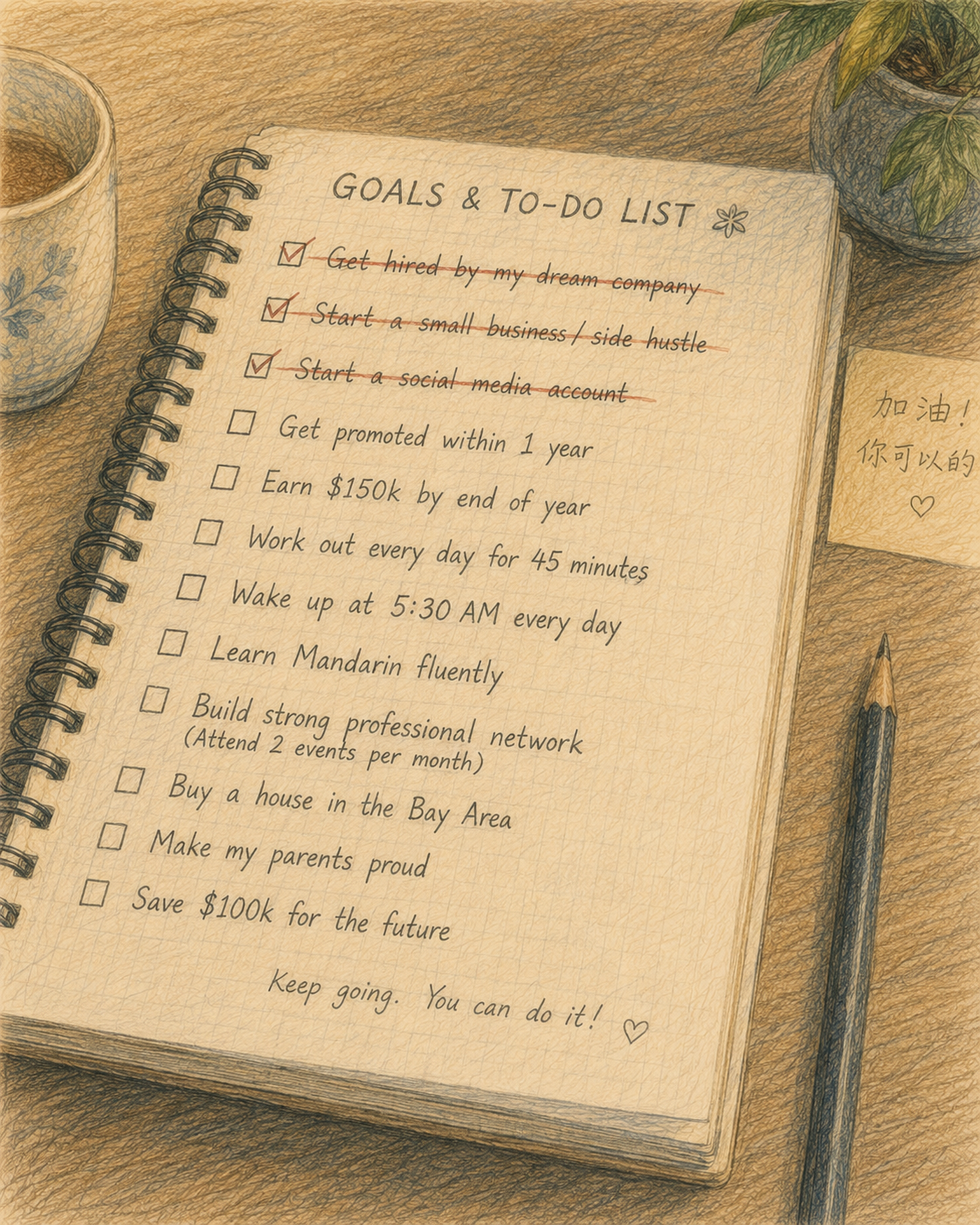
Sometimes the to-do list grows faster than the sense of accomplishment.
One reason productivity feels comforting is that it creates a sense of control. When life feels uncertain, our mind naturally looks for something it can influence. We may not be able to control another person's decisions, the outcome of a difficult conversation, or whether a relationship improves. But we can often control our effort.
Doing something often feels easier than not knowing.
I often see this when people are struggling with uncertainty in their relationships. Someone might think, "If I communicate better, maybe I can save this relationship." Another person may spend hours researching, planning, reading books, or trying one more strategy because taking action feels better than waiting. Even when the outcome remains uncertain, productivity creates the feeling that we are moving forward.
Productivity can create a sense of direction when we feel lost.
In many ways, productivity helps reduce the discomfort of uncertainty. It gives us a goal to pursue, a problem to solve, or a next step to take. The challenge is that over time, productivity can become our default response whenever life feels uncomfortable.
Instead of asking ourselves how we feel, we immediately ask ourselves what we should do next. Staying busy may start to feel safer than slowing down long enough to notice what is happening inside us.
Productivity May Be Carrying More Than Work
Productivity does not only help us complete tasks. Sometimes it also helps us meet emotional needs that we may not fully recognize.
Sometimes productivity becomes more than a habit—it becomes how we measure ourselves.
For some people, being productive creates a sense of competence. For others, it brings reassurance, recognition, or approval. It can become connected to feeling useful, responsible, accepted, or valued. The more emotional meaning productivity carries, the harder it becomes to separate what we accomplish from how we feel about ourselves.
I remember this showing up in my own experience when I first started working in the United States as an immigrant. Beyond simply doing my job well, I wanted to prove that I belonged. I wanted to show that I could succeed in a different culture, communicate effectively, and contribute in meaningful ways. Looking back, I realized I was often working much harder than what was actually required. While an "80" may have been enough, I aimed for a "95" and put in "150" worth of effort to account for anything that might affect the outcome. Part of that effort came from dedication, but part of it also came from a desire to be accepted and recognized.
Sometimes productivity becomes a way of answering emotional questions.
Am I good enough? Do I belong here? Am I valued? Am I contributing enough?
The challenge is that productivity can temporarily soothe those questions without fully resolving them. This is why achievement can feel deeply satisfying in one moment and surprisingly insufficient in the next. Productivity may be helping us accomplish goals, but it may also be carrying emotional jobs that no amount of accomplishment can completely fulfill.
Why Success Doesn't Always Feel Like Enough
When productivity is carrying emotional needs, success often feels different than we expect.
Achievement can bring relief, but relief is not always the same as peace.
Reaching a goal may temporarily quiet our doubts. A promotion, a completed degree, positive feedback, or a successful project can create a sense of accomplishment. For a moment, we feel reassured. We may feel more confident, more accepted, or more secure. Yet many people notice that the feeling does not last as long as they hoped.
Before long, a new goal appears.
The finish line has a way of moving.
The promotion becomes the expectation. The degree becomes the starting point for the next achievement. The successful year becomes the standard to maintain. Instead of feeling satisfied by what we have accomplished, we find ourselves focused on what comes next.
This does not mean there is something wrong with ambition. Goals can inspire growth, purpose, and meaning. The challenge is that achievement struggles to answer emotional questions permanently. If productivity has been helping us manage fears about worth, belonging, acceptance, or adequacy, another accomplishment may soothe those fears for a while without fully resolving them.
Sometimes the problem is not that we have achieved too little. Sometimes the problem is that achievement has been asked to do a job it was never designed to do.
No amount of productivity can permanently answer the question, "Am I enough?" That question often requires something deeper than another accomplishment.
Looking Beyond What Gets Done
By this point, you may be wondering whether productivity is a good thing or a bad thing. I don't think it is either.
Productivity can help us navigate life, create structure, and move toward meaningful goals. The question is not whether productivity is good or bad, but what role it has been playing in our lives.
Sometimes awareness is more important than changing the behavior.
If productivity has helped you feel safe, valued, accepted, or in control, it makes sense that slowing down might feel uncomfortable. Productivity may be carrying more than the task itself—it may also be carrying emotional burdens, beliefs, fears, or hopes.
This is where curiosity can be helpful.
Instead of immediately asking, "How do I become less productive?" perhaps we can pause and ask a different question:
Wait... what is productivity doing for me?
What is driving the goal?
Does it reflect something that genuinely matters to you? Or is it helping you manage fear, seek approval, avoid disappointment, or prove your worth?
You might also wonder:
What does productivity give me besides results?
When life feels uncertain, does staying busy help me feel safer?
If no one else knew about this achievement, would it still matter to me?
What am I hoping to feel after I reach the next goal?
Am I moving toward something I value, or away from something I fear?
Many goals contain a mix of both ambition and emotional needs.

Self-compassion begins when we become curious about what productivity has been carrying for us.
The invitation is not to stop being productive. It is to understand what productivity may be carrying for you. The more aware we become of those emotional layers, the more choice we have in how we pursue our goals.
Sometimes healing begins not by doing less, but by understanding why doing so much feels necessary.
What Productivity Was Trying to Protect
By now, you may be seeing productivity a little differently. What if productivity was never just about getting things done? What if it was also helping you navigate uncertainty, earn acceptance, manage fear, or create a sense of control during difficult seasons of life?
Understanding its protective role allows us to respond with self-compassion rather than self-judgment.
Instead of criticizing ourselves for always staying busy, we can become curious about what productivity has been helping us carry. For many people, productivity was not a random habit. It was an adaptation. It helped us move forward when life felt uncertain. It helped us feel useful, valued, or capable when those feelings were difficult to find elsewhere.
This doesn't mean productivity is bad, nor does it mean you need to give it up. The invitation is simply to understand it more fully.
Perhaps the deeper question is not, "How do I stop being productive?" but "What am I afraid might happen if I stop?"
That question is where many healing journeys begin. And sometimes, behind productivity, we discover a hardworking part of ourselves that has been trying very hard to keep us safe all along.
Continue Exploring
If this article resonated with you, you may also be interested in:
When Scrolling, Watching, or Sleeping Still Doesn't Feel Like Rest — Why numbing and restoration are not the same thing.
Why Doesn't Every Vacation Feel Restful? — Understanding why time off doesn't automatically help us recharge.
If Your Inner Workaholic Never Lets You Rest (coming soon) — Exploring the protective part that keeps pushing you forward.
In Many Asian Families, Emotions Were Practical Problems to Solve help me write a brief into like (coming soon) — How culture and family messages shape our relationship with emotions and body awareness.
About the Author
Jingyi Chen is a Somatic Therapist serving adults throughout California via telehealth. She specializes in childhood trauma, family relationships, and Asian American mental health. Drawing from somatic therapy, Brainspotting, Internal Family Systems (IFS), and mindfulness-based approaches, she helps people understand the deeper patterns behind their emotions, reconnect with their bodies, and develop a greater sense of safety, self-compassion, and choice.
