From Survival Mode to Self‑Awareness: 7 Ways Online Trauma Counseling in California Guides the Shift
Trauma Responses Are Normal: Online Trauma Counseling California Can Help
When life has pushed you into survival mode for years, your reactions aren’t flaws—they’re adaptations. Many people wonder, “What’s wrong with me?” when they shut down emotionally, overthink every detail, avoid conflict, or stay constantly busy. But these patterns are often your nervous system’s way of protecting you in unsafe or overwhelming situations.
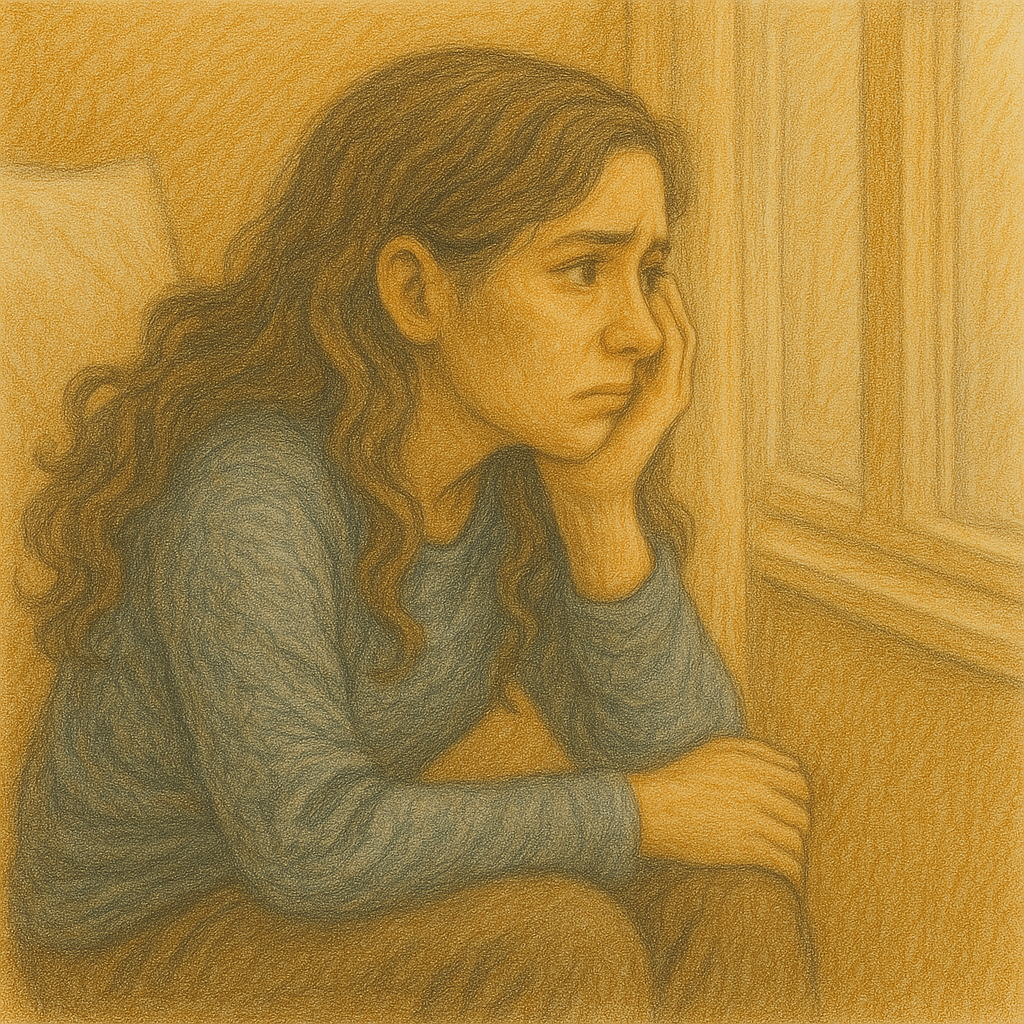
Am I too sensitive?"—a quiet moment of self-doubt shaped by past survival patterns.
According to SAMHSA’s Trauma‑Informed Care guidelines published through the NCBI Bookshelf, trauma can shape how we think, feel, and respond—especially when the stress is chronic or relational.¹ What looks like “too sensitive,” “too independent,” “too reactive,” or “too numb” is often a normal response to events that exceeded your capacity to cope.
If you grew up without emotional safety—or learned to manage chaos alone—these responses weren’t choices. They were survival strategies. And the fact that you’re here, questioning, learning, and trying to understand yourself, is a sign of strength, not failure.
If you’re still unsure what “counts” as trauma, you can explore more in my companion blog: What Counts as Trauma? Naming the Wounds We Learn to Hide in Online Trauma Counseling California.
Trauma responses are human responses. And they can heal.
What Does It Mean to Be a Survivor?
You Didn’t Ask for It—But It Happened
When you’ve been through something painful or traumatic, one of the hardest truths to accept is that it wasn’t your fault—and you couldn’t have stopped it. But many trauma survivors don’t start there. Instead, they question themselves:
Why didn’t I leave?
Why didn’t I fight back?
Was it even that bad?
Blaming yourself can feel oddly safer than acknowledging the raw truth—that you were powerless in that moment.
The word victim often carries uncomfortable weight. In some cultures or families, being a victim may feel like weakness or failure. And yet, naming yourself a victim doesn’t mean staying stuck—it means honoring what was done to you.
You didn’t choose the pain. Someone hurt you. Something happened. Naming that is not self-pity—it’s self-honesty.
Accepting your victimhood doesn’t mean you’re fragile—it means you’re finally letting the truth be seen.
From Endurance to Empowerment: Becoming a Survivor
Being a survivor doesn’t cancel out the fact that you were once a victim. It simply means: you made it through.
You adapted. You kept going. You found ways to survive—whether by numbing, overachieving, caretaking, or tuning out. Those strategies got you here. That’s strength.
But survival mode is exhausting. Many people stay in it for years—always bracing for the next hit, staying hyper-independent, never slowing down enough to feel.
Stepping into the identity of a survivor means recognizing your agency in the now, even if you had none then. It’s reclaiming your story. It’s saying: What happened shaped me—but it doesn’t get to define me.
In trauma therapy, both parts of the journey are honored. The pain that wasn’t your fault. The strength that got you through.
You don’t have to choose between them. You are both.
From Survival to Awareness: 8 Gentle Shifts That Heal
Noticing you’re in survival mode isn’t a failure — it’s the first step toward healing. These shifts don’t require you to push harder or be better. They invite you to slow down, listen inward, and build safety from the inside out. Here are seven ways clients begin to move from survival to self-awareness in online trauma counseling in California.
1. Not Lazy, Not Broken—Just in Survival Mode
You might describe yourself as “too sensitive,” “always on,” or even a perfectionist who can't slow down. But these aren’t flaws—they're your nervous system’s way of protecting you. Fight, flight, freeze, and fawn are biological responses to stress, and they often show up long after the original threat is gone.
Maybe you always feel the need to be productive, to keep everything under control. That could be fight in disguise. Or maybe you people-please to avoid tension or conflict—that’s fawn. Emotional shutdown or zoning out? That’s freeze, and your body trying to protect you by going numb.
These patterns don’t mean you’re broken. They’re signs you adapted to survive.
If you took on adult responsibilities too young, you may relate to being a parentified child—a mix of fight and fawn responses. Or if you find yourself emotionally overwhelmed by tone shifts, criticism, or emotional tension, that could be your flight or fawn response trying to keep you safe.
The first step to healing? Recognizing that these reactions helped you survive—and now, you get to learn new ways to feel safe.
Related Blogs for Further Reading:
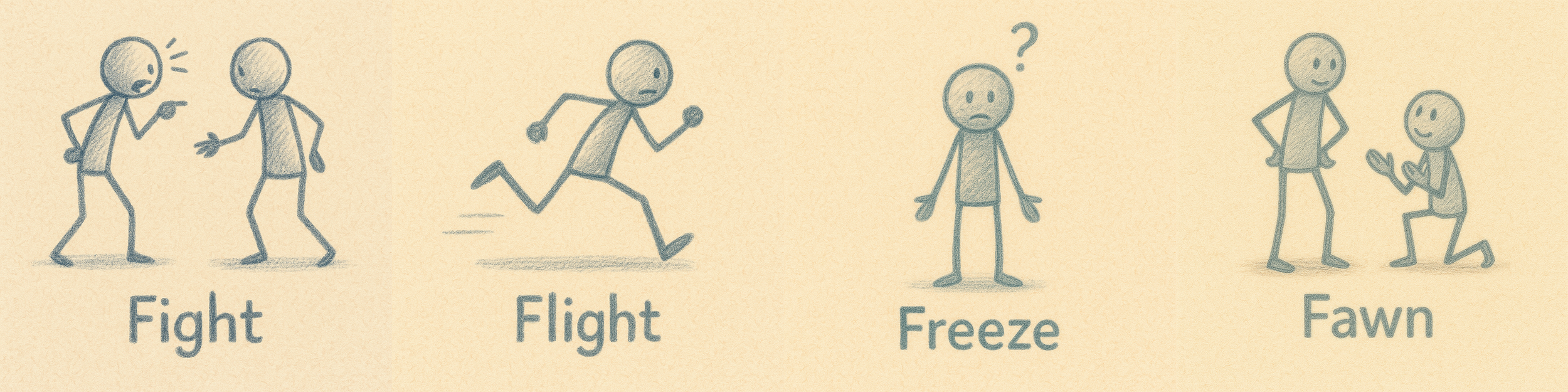
Understanding your survival response is the first step to change.
2. Meet the Inner Voices That Are Trying to Help
Maybe you have a voice that says “You’re not doing enough.” Or one that always keeps you busy so you don’t fall apart. These voices aren’t random — they’re parts of you, shaped by experience.
Internal Family Systems (IFS) invites us to be curious about these inner parts, rather than shutting them down. The perfectionist, the avoider, the inner critic — they’re often trying to protect younger, more vulnerable parts of you that still carry emotional pain.
In online counseling, you can learn to pause and notice:
Which part of me is speaking right now?
What is it afraid will happen if I don’t listen?
This shift creates space between you and the voices inside you, helping you respond with clarity, not just react from fear.
Related Blogs for Further Reading:
3. Your Body Remembers—And It Also Knows How to Heal
Trauma often lives in the body—not just in memories. You might feel it as chronic tension, shallow breathing, stomach knots, or a numb disconnect. These are clues, not defects.
Somatic awareness means gently tuning in to what your body is trying to tell you. Practices like grounding, breathwork, and mindful movement help re-establish a sense of internal safety.
Your body doesn’t need to be forced to relax. It needs space, signals of safety, and patience. Over time, this builds your capacity to stay present, even when discomfort arises.
Related Blogs for Further Reading:
4. Small Moments of Calm Are Worth Noticing
Healing doesn’t only happen in therapy breakthroughs — it happens in small, ordinary moments. Noticing when your jaw unclenches. When you feel warmth from the sun. When someone meets your eyes with kindness.
These micro-moments signal safety to your nervous system. They help expand your window of tolerance — the range in which you can feel emotions without shutting down or becoming overwhelmed.
In online trauma counseling, we often pause to notice these moments. They are small, but powerful reminders: your body can feel good things too.
Over time, these pockets of calm create space for new patterns to grow.
Related Blogs for Further Reading:
5. Boundaries Aren’t Walls—They’re Bridges
If you grew up learning to keep the peace, take care of others, or avoid conflict, boundaries may feel selfish or cold. But boundaries are actually tools for connection — they protect what matters.
A boundary might sound like: “I need some time to think before responding,” or “I’d rather not talk about that right now.” These are not rejections; they’re honest signals about your emotional needs.
In family systems, we often inherit blurred roles — the helper, the fixer, the invisible one. Boundaries help you re-define those roles and return to your values.
Learning to set limits isn’t about pushing people away — it’s about creating space to meet each other with more honesty and care.
6. When Shame & Guilt Whisper, Listen for What You Need
Shame says “you are wrong.” Guilt says “you did something wrong.” But both can be signals of deeper needs: a longing to be accepted, to belong, to not hurt anyone.
For trauma survivors, shame and guilt often arise when you begin putting yourself first. You might feel selfish for saying no, resting, or wanting more.
Instead of pushing these feelings away, we can learn to ask: What is this guilt protecting me from? What does this shame need to feel safe?
Therapy helps you differentiate these voices from your truth, and gently practice new responses that align with your healing.
Related Blogs for Further Reading:
7. Family Roles Were Survival Maps—Now You Get to Rechart
Were you the responsible one? The emotional buffer? The “easy” child? These roles helped your family system function, especially in homes shaped by stress, silence, or intergenerational trauma.
But these maps were drawn for survival, not self-expression. As an adult, you may realize: this role no longer fits.
Structural Family Therapy shows us that roles exist for balance — but we’re allowed to shift them. You can step out of “fixer mode” without letting others down. You can speak your truth without betraying your roots.
In online therapy, clients explore not just what’s wrong — but what else is possible. You can redraw your story.
Discover New Possibilities with Online Trauma Counseling California

Your roots may be tough—but you can still grow.
You don’t have to keep carrying it all on your own. Trauma recovery doesn’t always begin with big declarations or perfect insight—it often starts with a safe space to feel, reflect, and be heard.
In individual therapy, you can explore your inner world at your own pace, learn to recognize survival patterns, and build new ways of responding that feel more aligned with who you are today.
In family therapy, you’ll have a supportive place to gently unpack generational dynamics, clarify boundaries, and begin repairing emotional connection—without blame or pressure.
Online trauma counseling in California makes this healing more accessible. You can show up from your own space, at your own pace—with a therapist who understands the weight of cultural expectations and the strength it takes to rewrite your story.
Your next step doesn’t have to be perfect. It just has to be yours.
About the Author
Jingyi (Jing) Chen, LPCC, is a trauma-informed therapist serving adults and families across California through online counseling. She integrates somatic work, IFS, Brainspotting, and structural family therapy to help clients heal from intergenerational trauma and reconnect with their true selves. Learn more at jcinsighttherapy.com
